

The Exposure Triangle
The Exposure Triangle: A Simple Way to Take Control of Your Nature & Wildlife Photos
If you’ve spent any time photographing wildlife or landscapes, you’ve probably had that moment—everything is happening fast, the light is changing, the animal is moving, and suddenly you’re spinning camera dials hoping something sticks.
I’ve been there more times than I can count.
That’s where the exposure triangle comes in. It’s one of those concepts that sounds technical at first, but once it clicks, it becomes second nature—and it’s especially useful when you’re out in unpredictable environments like forests, mountains, or open plains.
Let’s break it down in a way that actually makes sense in the field.
What Is the Exposure Triangle?
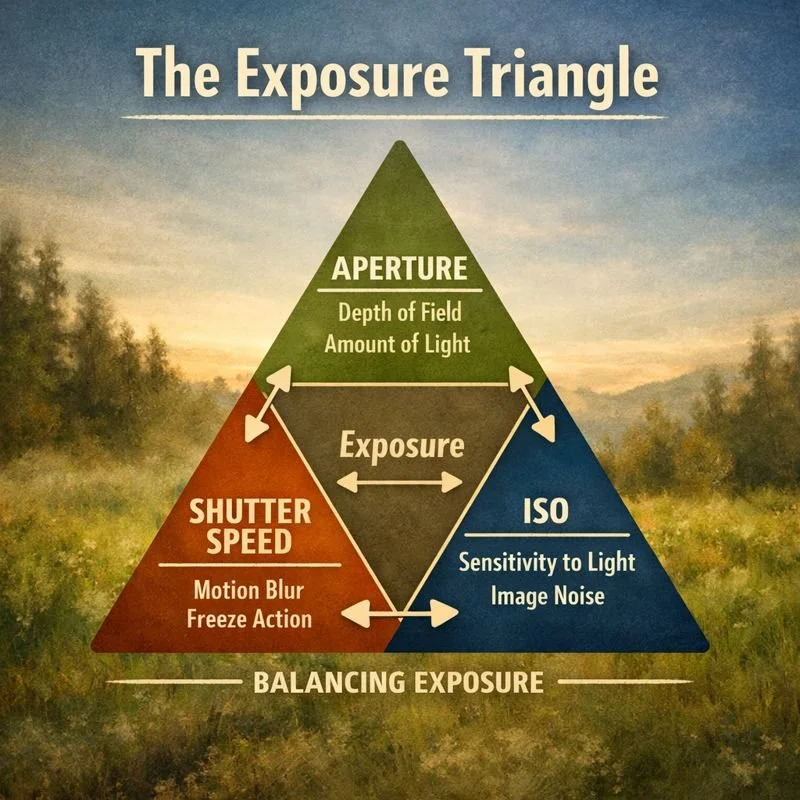
The exposure triangle is made up of three elements that work together to control how bright or dark your image is:
Aperture
Shutter Speed
ISO
Change one, and the others usually have to adjust to compensate. Think of it less like rigid rules and more like a balancing act—one that shifts depending on light, movement, and your creative goal.
Aperture: Setting the Scene
Aperture controls how wide your lens opens. In photography, this often determines how much of the scene is in focus.
When I’m photographing wildlife, I usually start here.
A wide aperture (like f/2.8, f/4 or f/5.6) lets in more light and creates a softer background—great for isolating an animal from a busy environment.
A narrow aperture (like f/8, f/11 or beyond) keeps more of the scene sharp, which works well for landscapes or environmental wildlife shots.
Out in the wild, backgrounds are rarely clean. Choosing your aperture intentionally helps guide the viewer’s eye to what matters most.
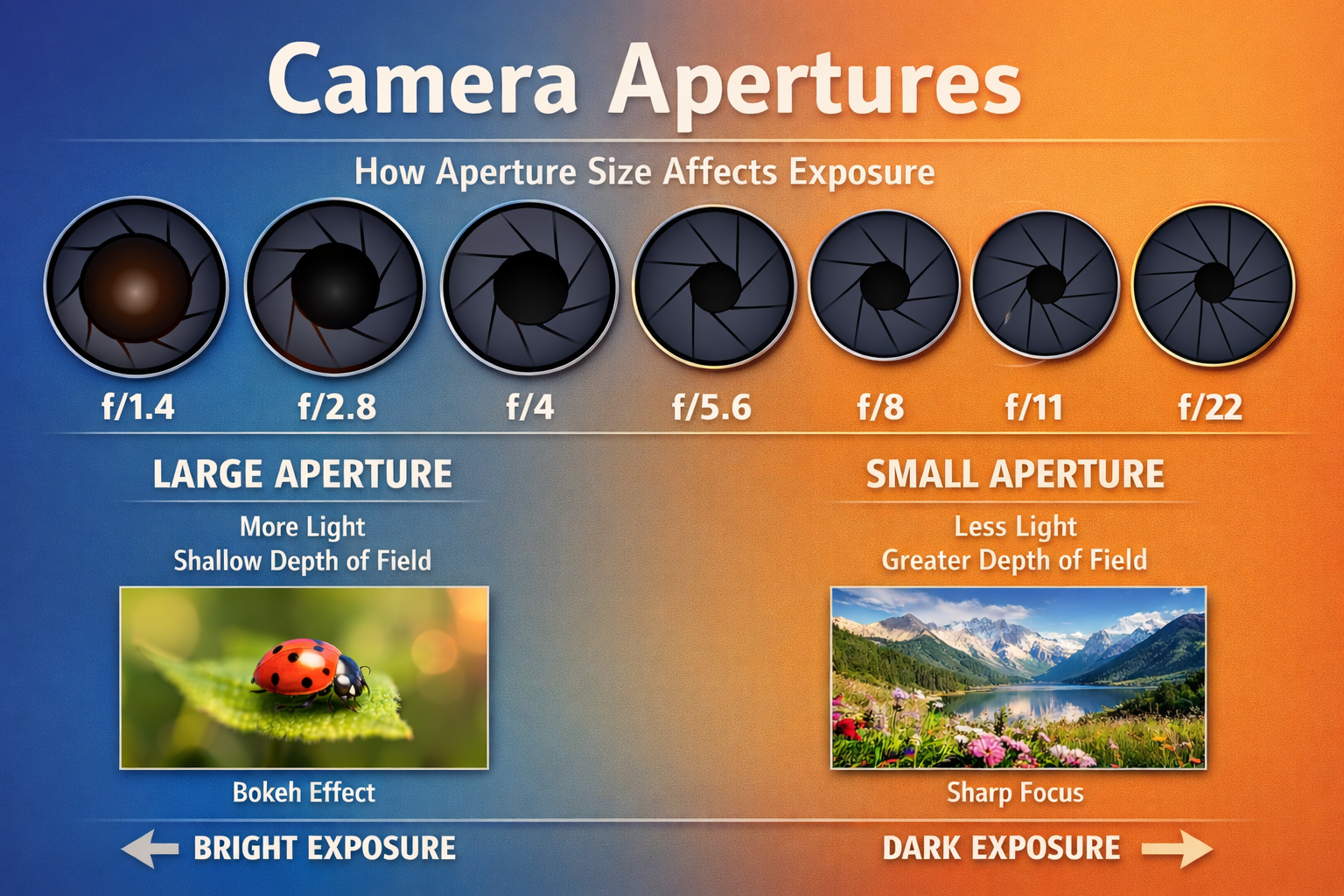
Bokeh is the blurred quality or effect seen in the out-of-focus portion of a photograph taken with a narrow depth of field.
Shutter Speed: Freezing (or Showing) Motion
Shutter speed controls how motion appears in your photo—and in wildlife photography, motion is almost always part of the story.
Fast shutter speeds (1/1000 or higher) freeze movement—perfect for birds in flight or animals on the move.
Slower shutter speeds can show motion, like flowing water or wind moving through grass.
If there’s one setting I refuse to compromise on with wildlife, it’s shutter speed. A perfectly exposed photo doesn’t mean much if your subject is unintentionally blurred.
ISO: The Safety Net (Used Thoughtfully)
ISO controls your camera’s sensitivity to light. It’s often the last piece I adjust—but it’s also the one that saves the shot when light is fading.
Lower ISO = cleaner images
Higher ISO = more light, but more noise
Early mornings and late evenings—prime time for wildlife—don’t always offer perfect light. I’d rather accept a bit of grain than miss the moment entirely. Modern cameras handle ISO far better than they used to, and a sharp, noisy image will always beat a blurry one.
How the Triangle Works in Real Life
Here’s how it usually plays out for me in the field:
Start with intent
Am I isolating an animal or capturing a broader scene? That sets my aperture.Lock in motion control
Is the subject moving? That determines my shutter speed.Adjust ISO to balance exposure
Once the first two are set, ISO fills the gap.
The key is knowing which setting matters most for the moment you’re in. The exposure triangle isn’t about memorizing numbers—it’s about making quick, confident decisions when nature doesn’t wait.
Why This Matters in Nature & Wildlife Photography
Wildlife doesn’t pose. Light doesn’t pause. And conditions change fast.
Understanding the exposure triangle gives you control, even in chaos. It lets you focus less on your camera and more on reading animal behavior, anticipating light, and being present in the environment.
That’s when photography becomes less about settings and more about storytelling.
Final Thoughts
If you’re still learning—and most of us always are—don’t feel pressured to master everything at once. Start paying attention to how one adjustment affects the others. Practice in low-pressure environments. Make mistakes.
The more time you spend in nature with your camera, the more intuitive the exposure triangle becomes. Eventually, it stops feeling like a triangle of rules and starts feeling like a quiet tool working in the background—letting you focus on the wild moments unfolding in front of you.
And honestly, that’s where the magic is.
